In a world where augmented reality has reached a point where it is impossible to distinguish between what is real and what is virtual, I proposed a race set in the historic Montjuic F1 circuit, with real and virtual obstacles.
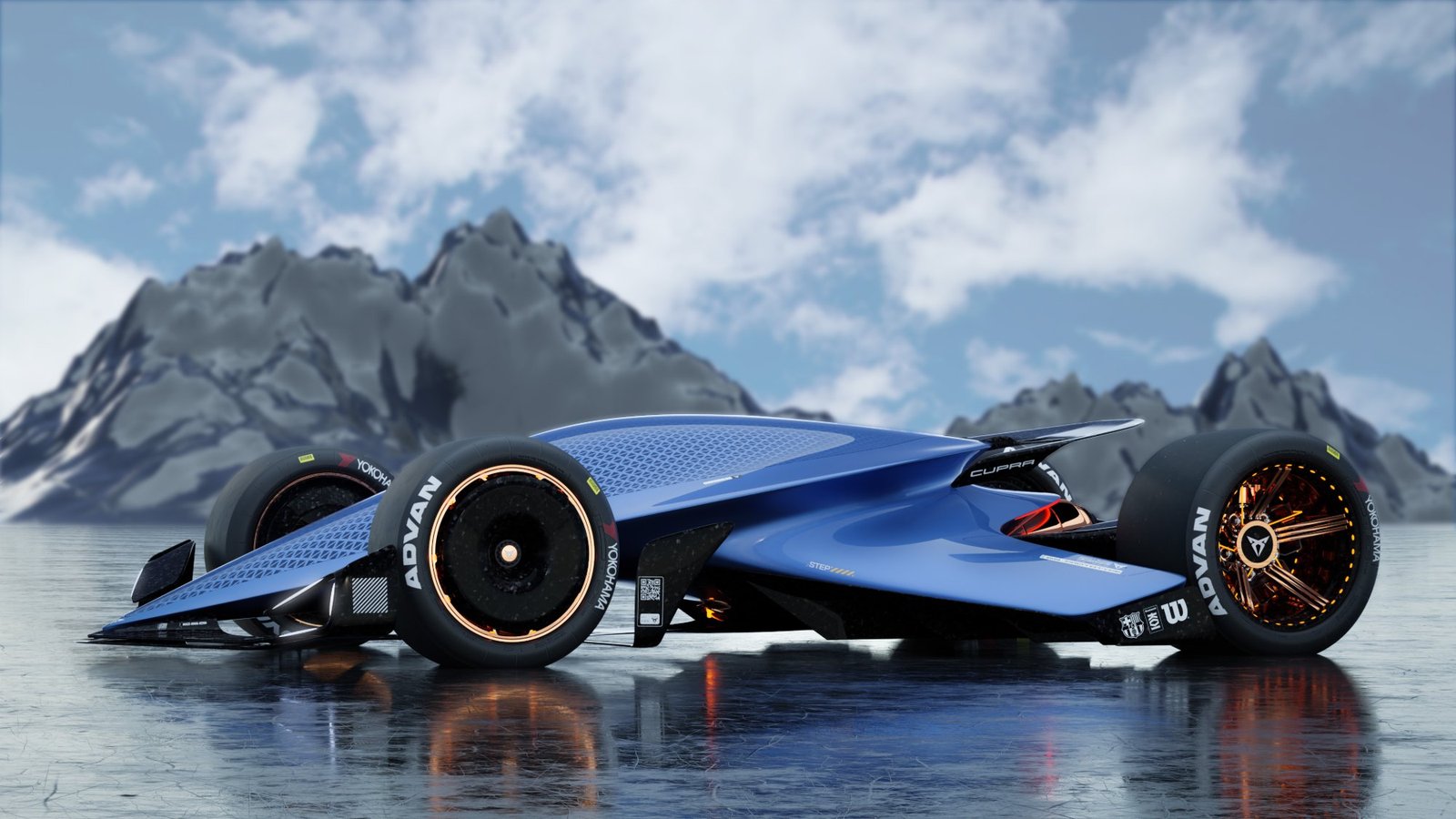
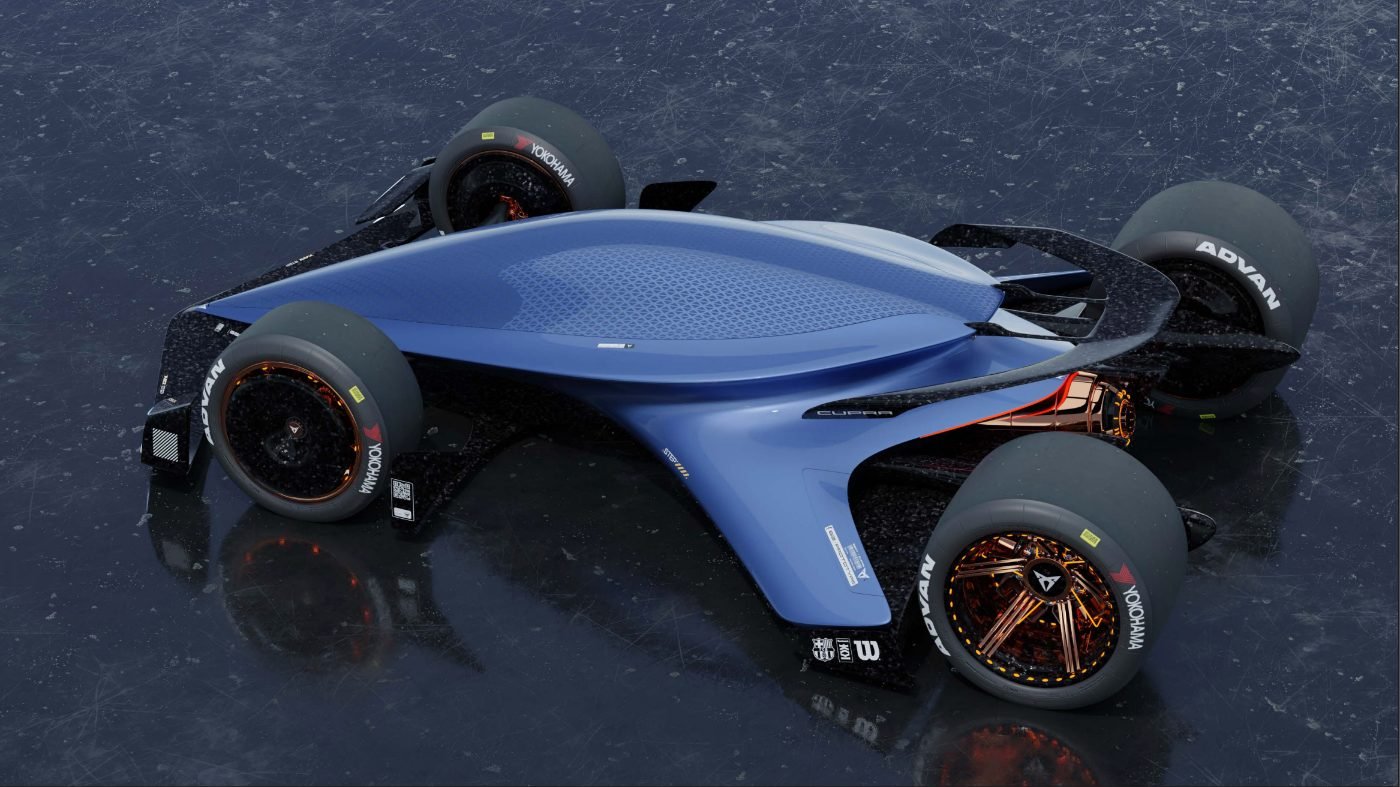
The driver builds his strategy as he goes: every obstacle is a decision to take a risk, to dodge it or go straight through it. The car exists to serve that decision — light, single-seat, electric, with the driver placed low and central so the track reads as one continuous surface ahead.
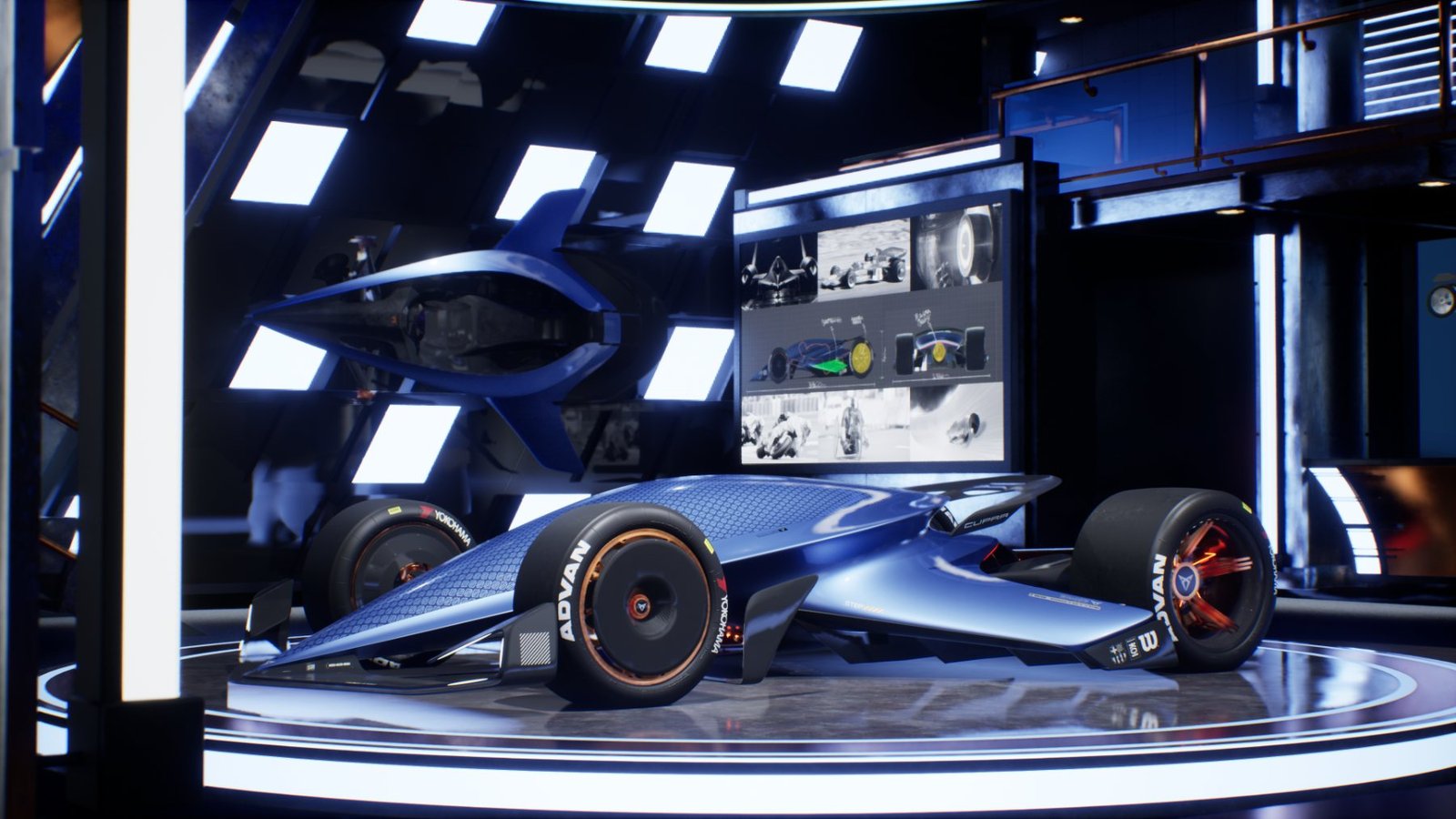
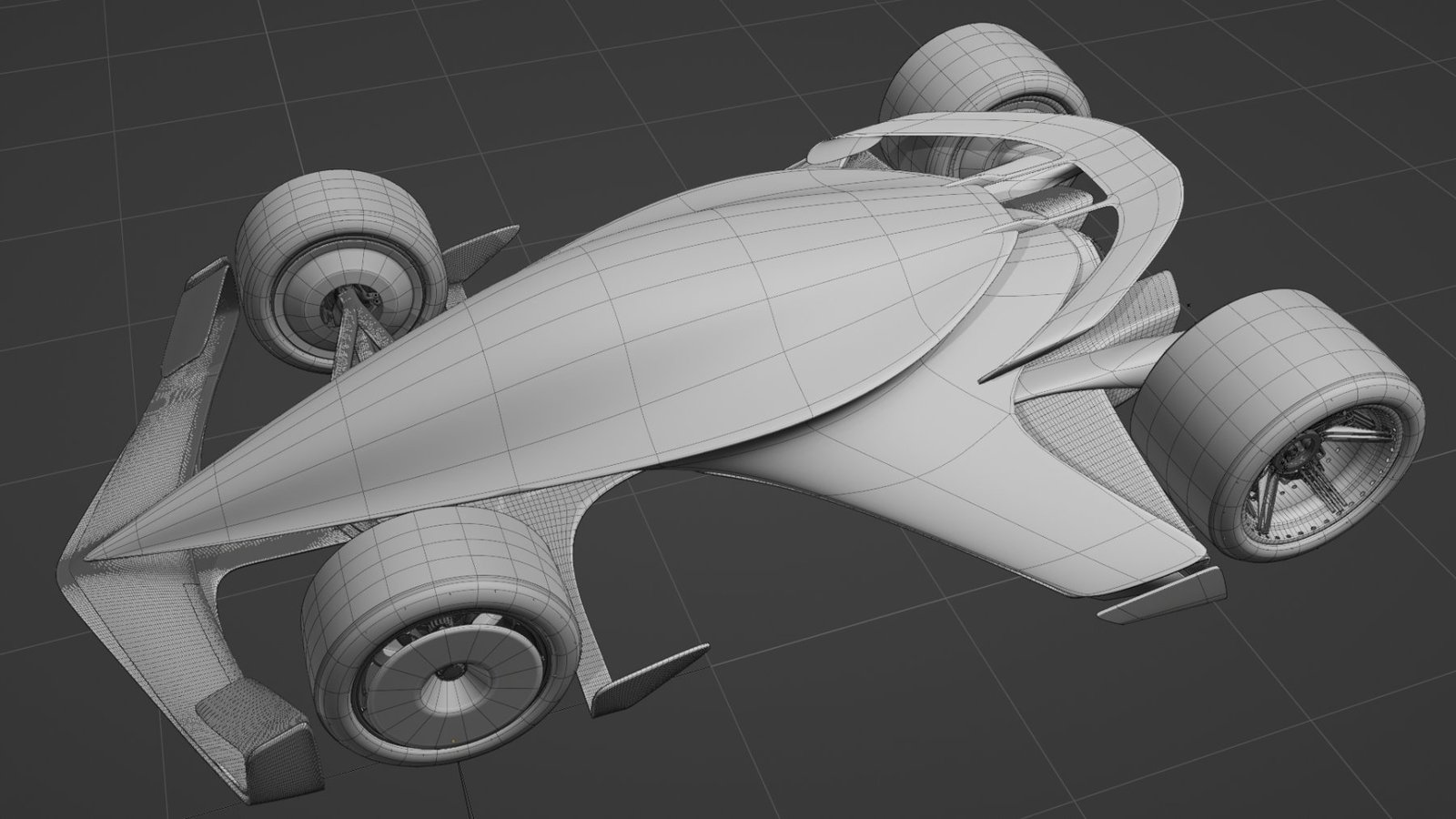
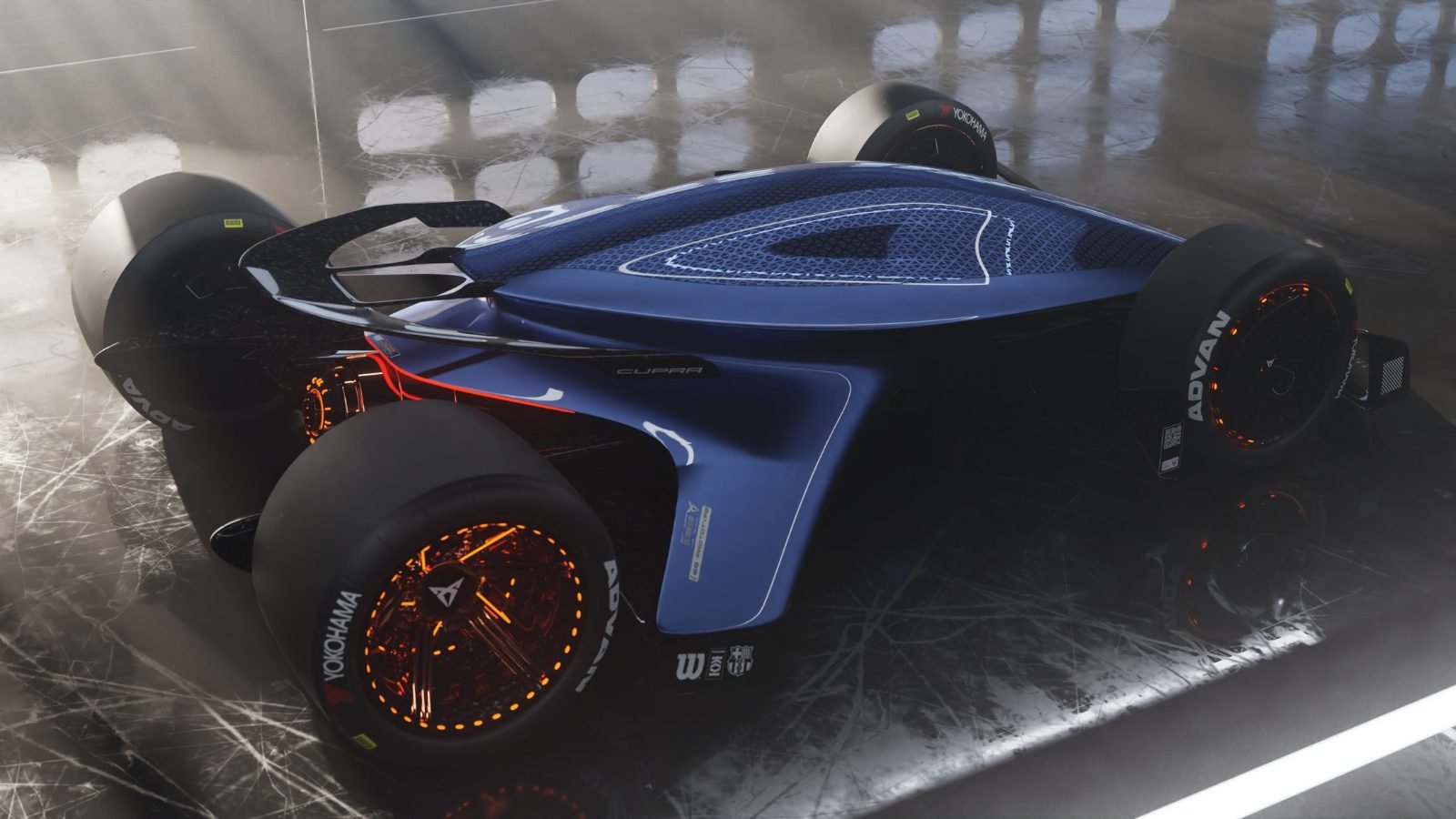
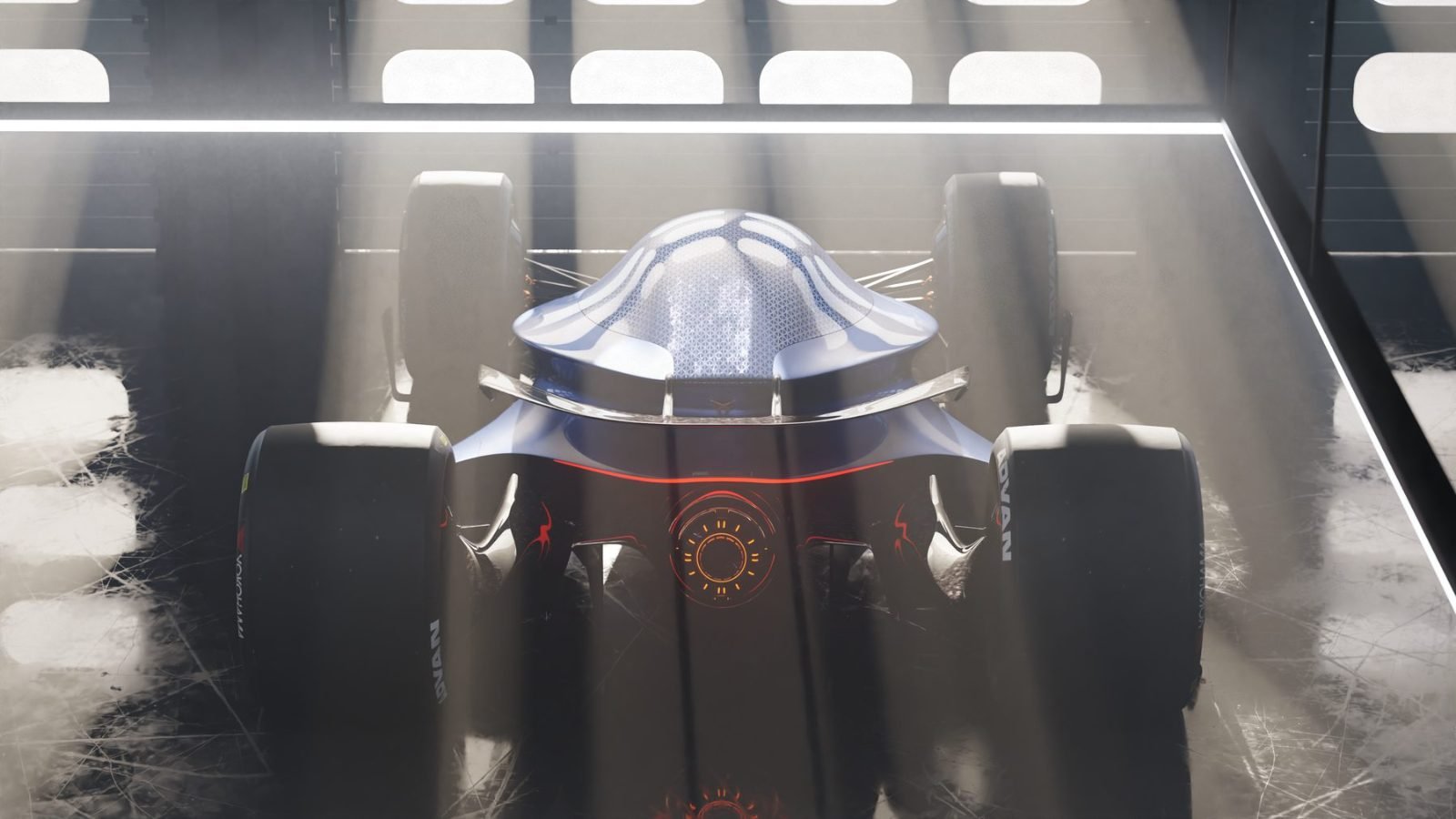
The car was developed straight in 3D after the first sketch rounds, so the surface could be judged in motion rather than on paper. Volume first — a single central spine and the two rear ducts — then the wheels and suspension pulled outside the body to keep the silhouette uninterrupted.
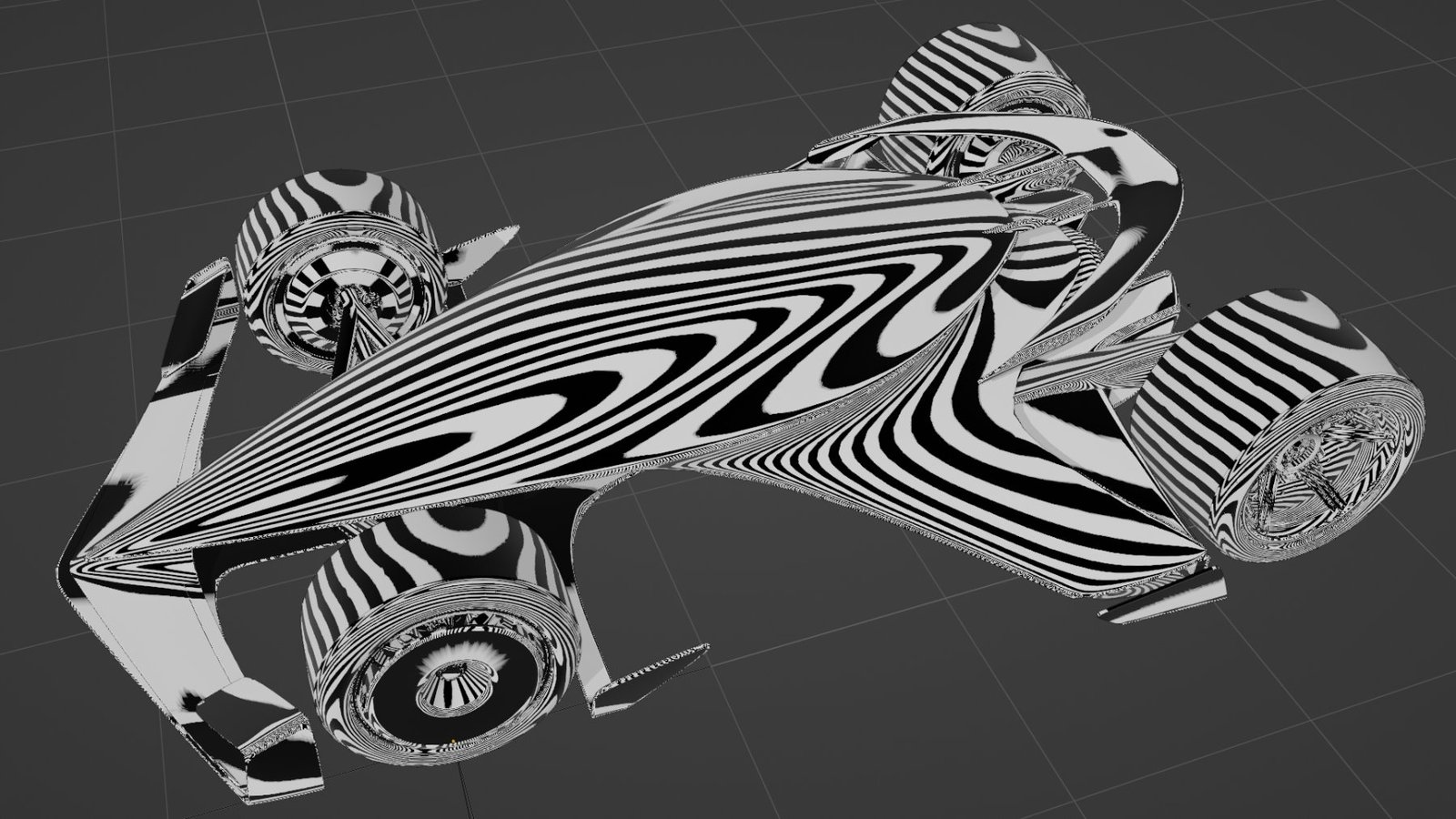
Mesh and zebra check on the same camera. The stripes show curvature continuity across the body. Drag the line.
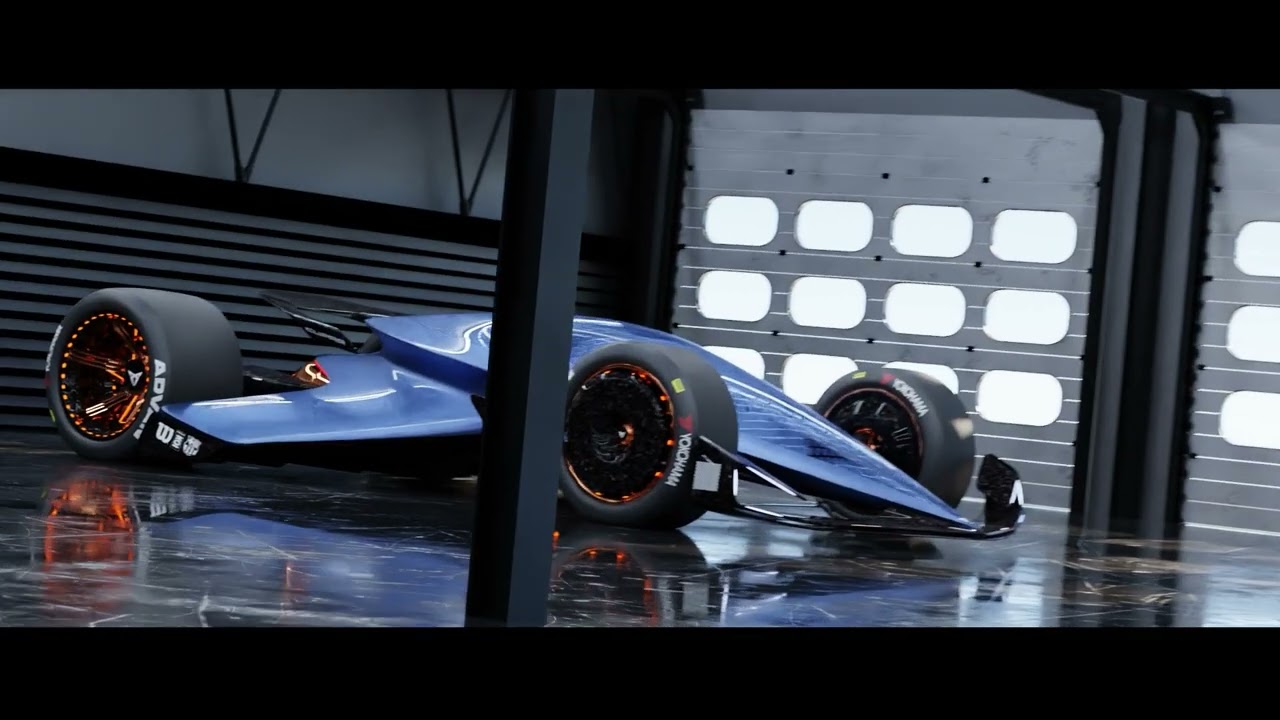
Barkeno framed as a race-strategy experience — circuit choice, obstacle race, time on target — cut with reference footage from Montjuic and other historic circuits.
The car in the garage set: hard overhead light on a wet floor, so the body reads as one surface and the exposed wheels sit clear of it.
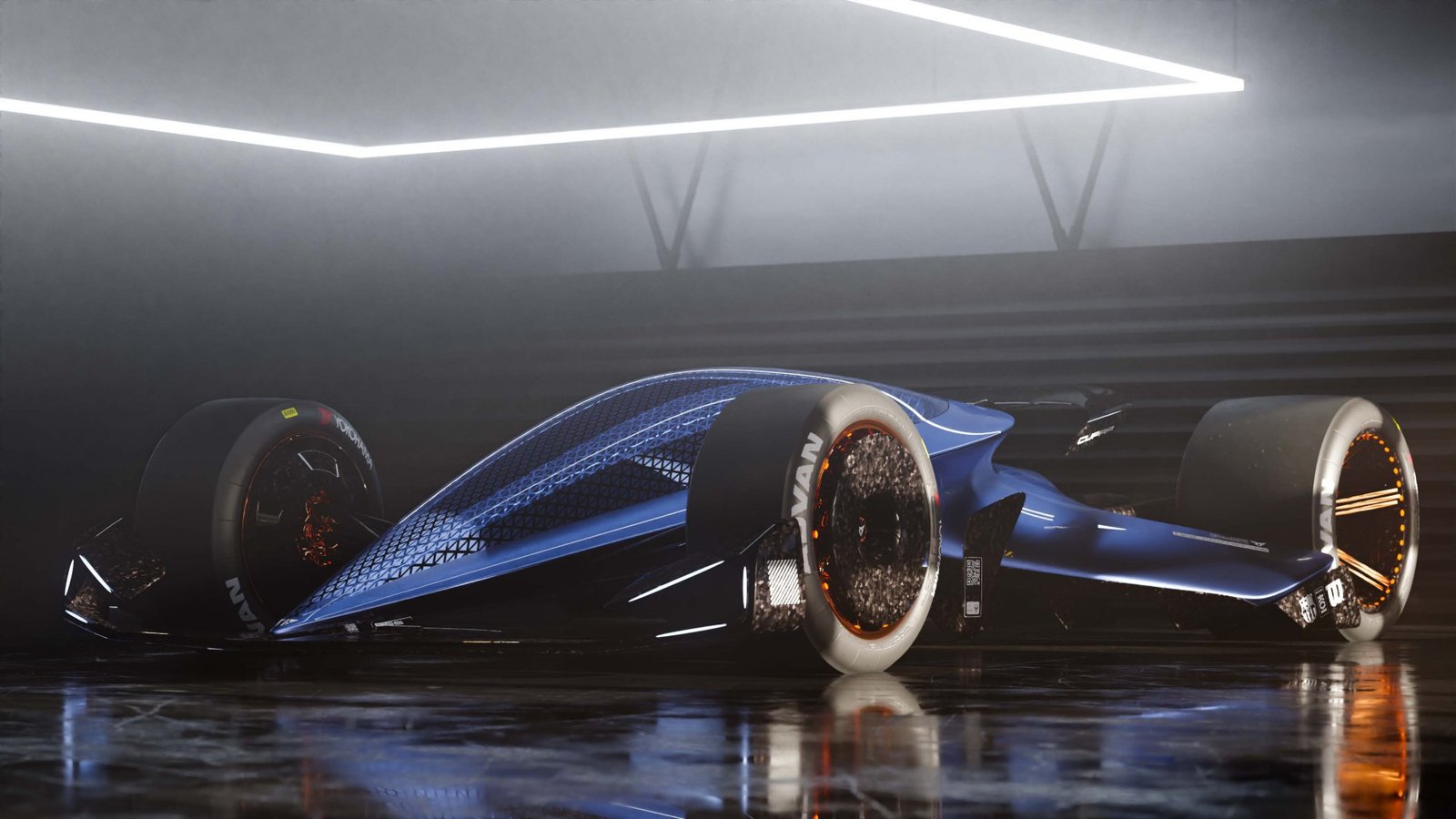
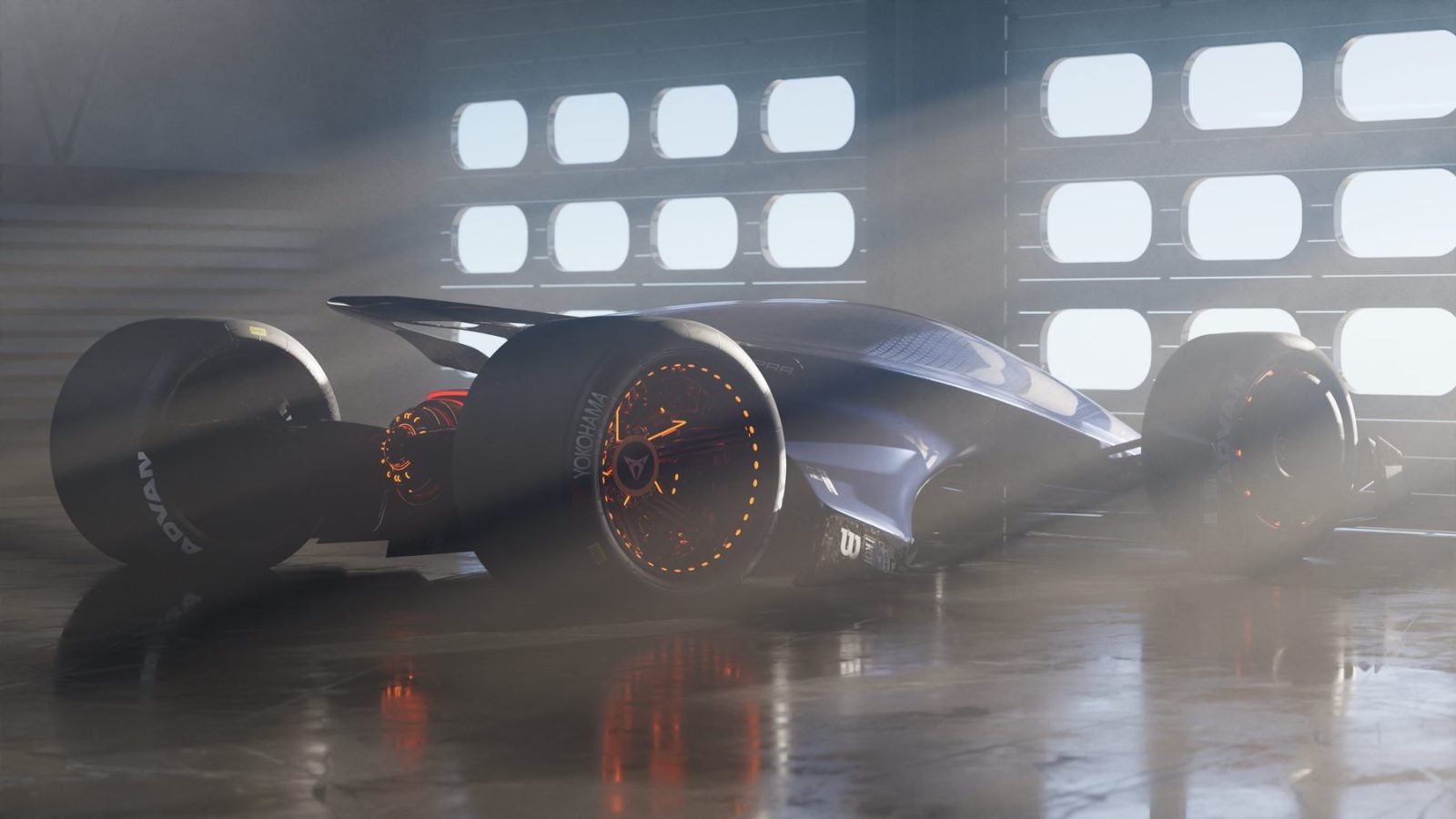
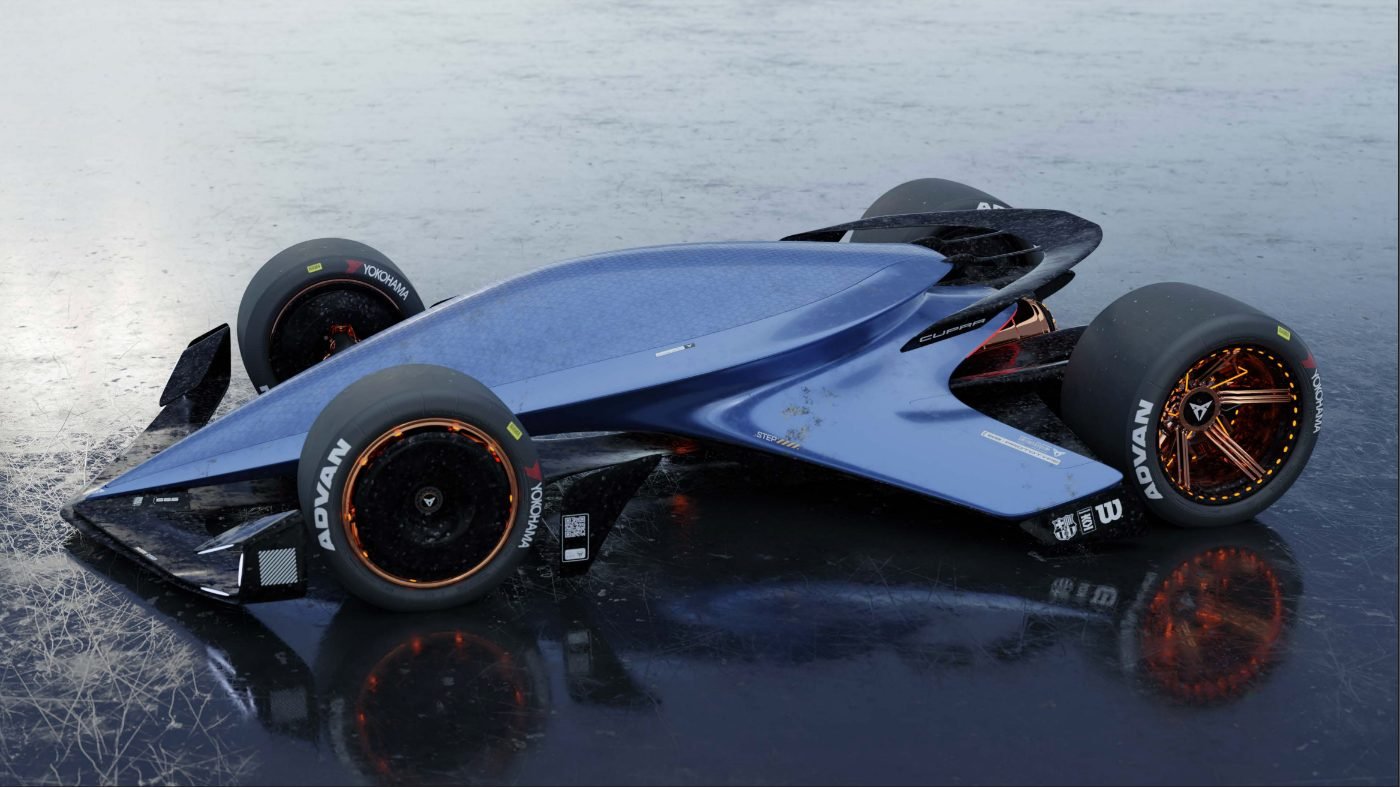
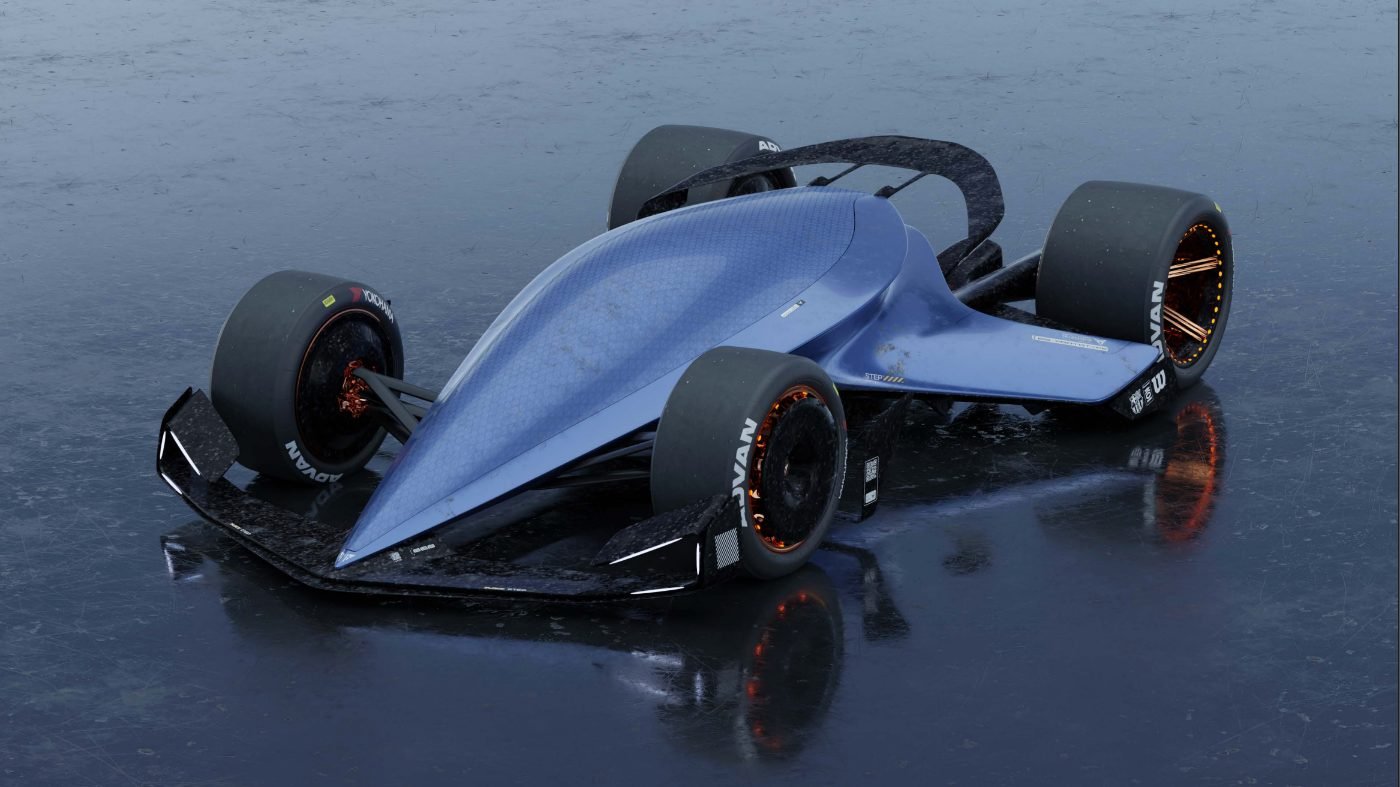

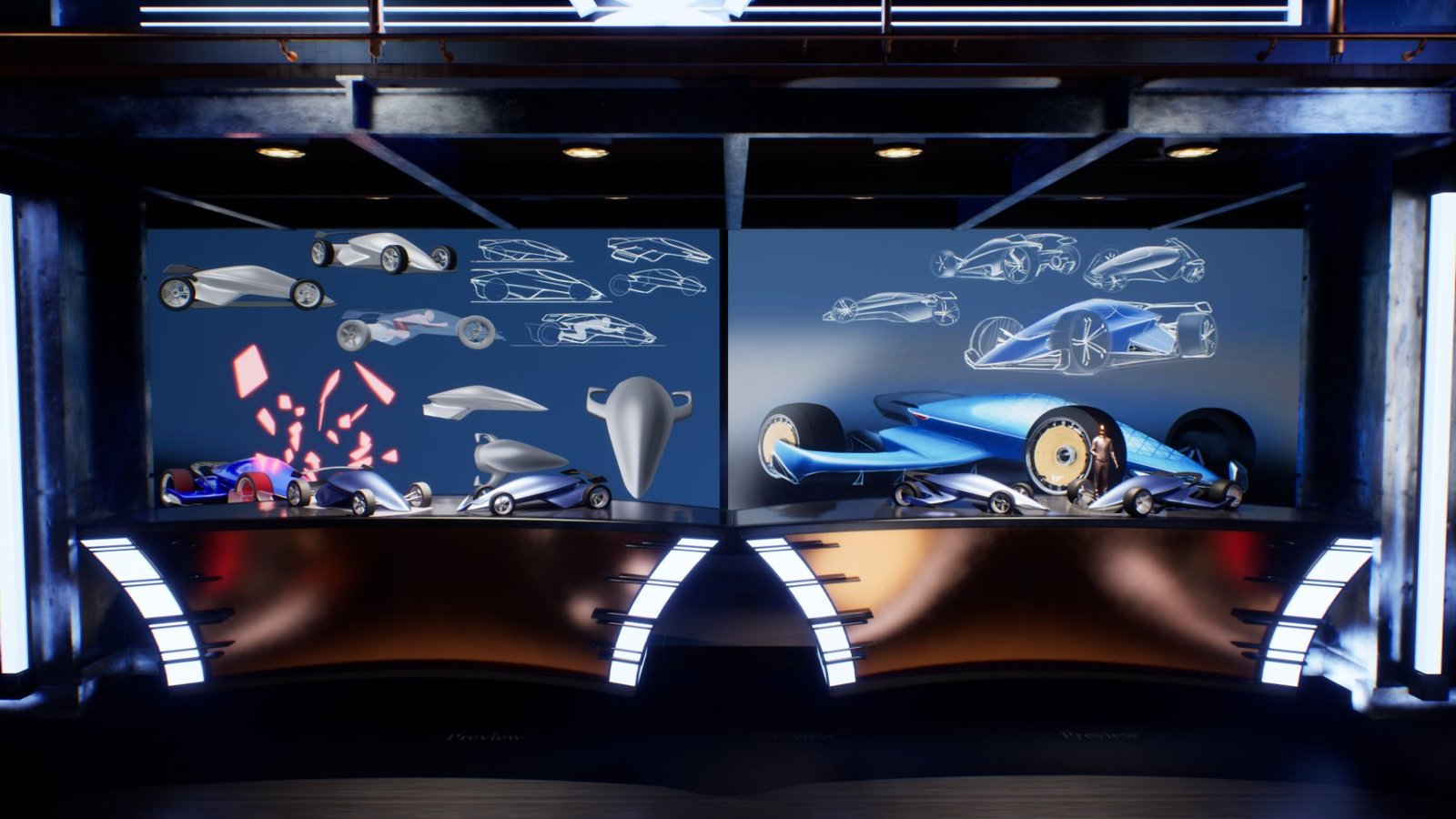
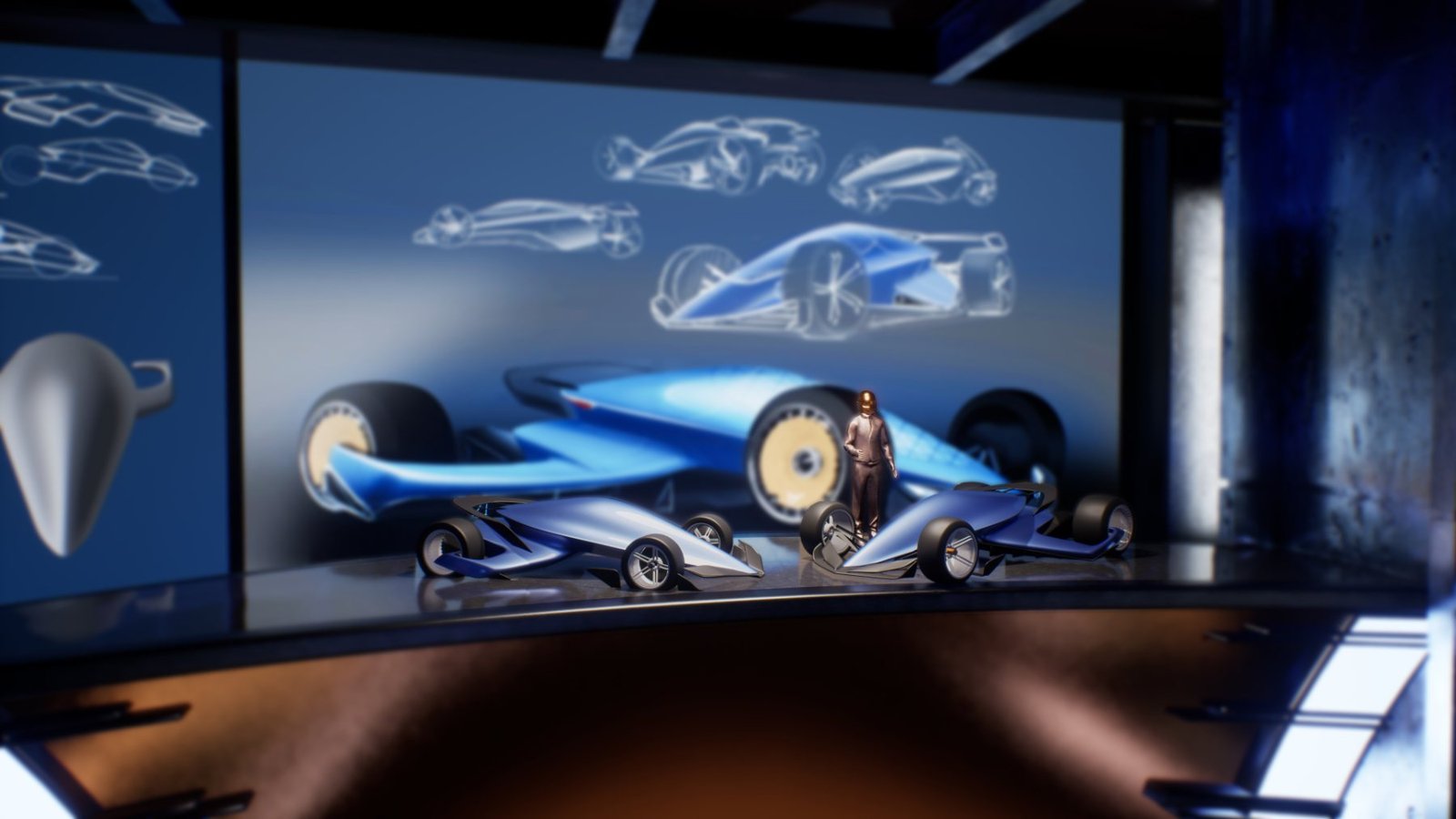
The whole design process reviewed live in Unreal Engine.